February 09, 2026 • 4 minutes
Setting the Mood: A Guide to Shaping How a Space Feels Through Interior Design
The most memorable spaces don’t announce themselves — they’re felt. Before someone notices the palette, the materials, or the layout, they register how a room makes them feel. Calm. Energized. Focused. Welcomed. Inspired.
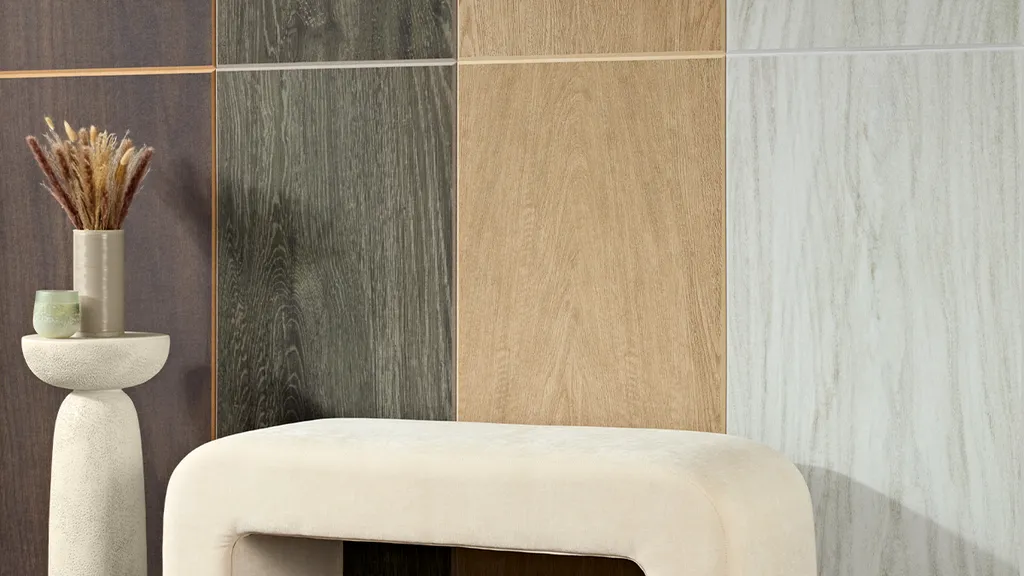 Sync Tiles | Dark Walnut printed on Nutmeg, Grey Wash printed on Pebble, Light Walnut printed on Vanilla, and White Wash printed on Frost
Setting the mood of a space is both art and science. It’s the thoughtful layering of color, acoustics, light, texture, and form all working together to support how people move, think, and connect within an environment. When these elements align, spaces don’t just look good; they perform.
Explore ways to intentionally shape the mood of any space through interior design — and why acoustics play a bigger role than most realize.
Color: The Emotional Foundation of a Space
Color is often the first mood-setter designers reach for — and for good reason. It has a direct psychological impact on how people experience a room.
Warm tones like terracotta, rust, and soft neutrals tend to create comfort and intimacy, making them ideal for hospitality, lounges, and collaborative spaces. Cooler hues — blues, greens, and muted grays — promote calm and focus, often favored in workplaces, education, and wellness environments. Meanwhile, high-contrast palettes and saturated accents introduce energy and movement, helping activate social or transitional zones.
Beyond hue alone, materiality matters. Soft, matte finishes absorb light and feel grounded, while dimensional or layered surfaces introduce shadow play and visual depth, subtly shifting the mood throughout the day.
Sound: The Invisible Mood Shaper
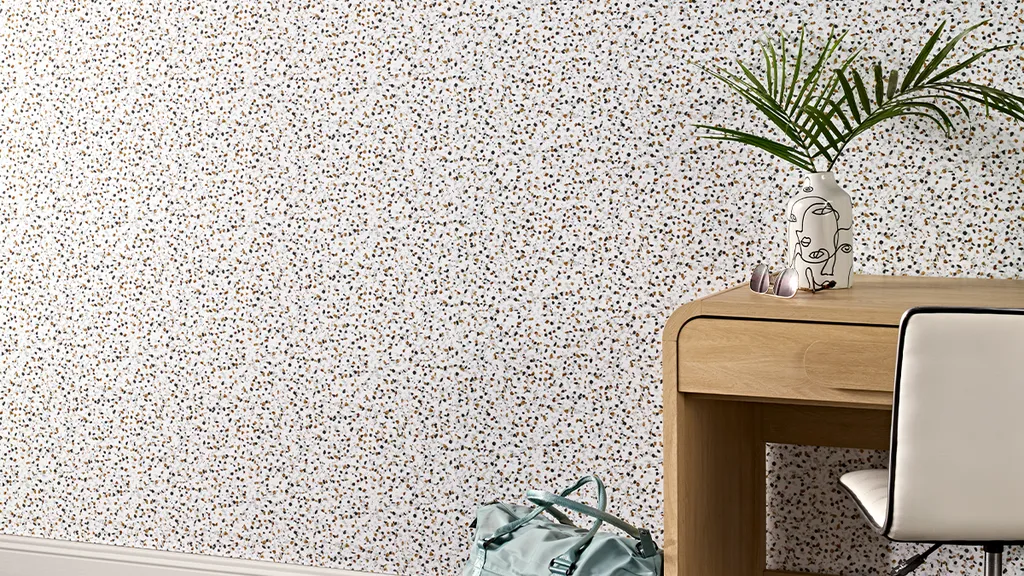 Kirei Ink | Collection: Natural Materials | Print: Terrazzo Creamsicle
Acoustics may be invisible, but their emotional impact is immediate. Excessive noise increases stress, fatigue, and distraction — while balanced acoustics support focus, comfort, and connection.
Designing for sound control is no longer optional in open-plan offices, restaurants, education spaces, or hospitality environments. High ceilings, hard surfaces, and open layouts amplify reverberation, often undermining even the most beautiful interiors.
Incorporating acoustic materials helps absorb and diffuse sound waves, lowering noise levels and creating a sense of calm. From sculptural ceiling clouds and baffles to wall tiles and panels, acoustic products allow designers to address sound without sacrificing aesthetics, turning functional elements into visual features that support the room’s emotional tone.
When acoustics are handled well, conversations feel effortless, spaces feel intentional, and occupants stay longer.
Light: Setting Rhythm, Energy, and Calm
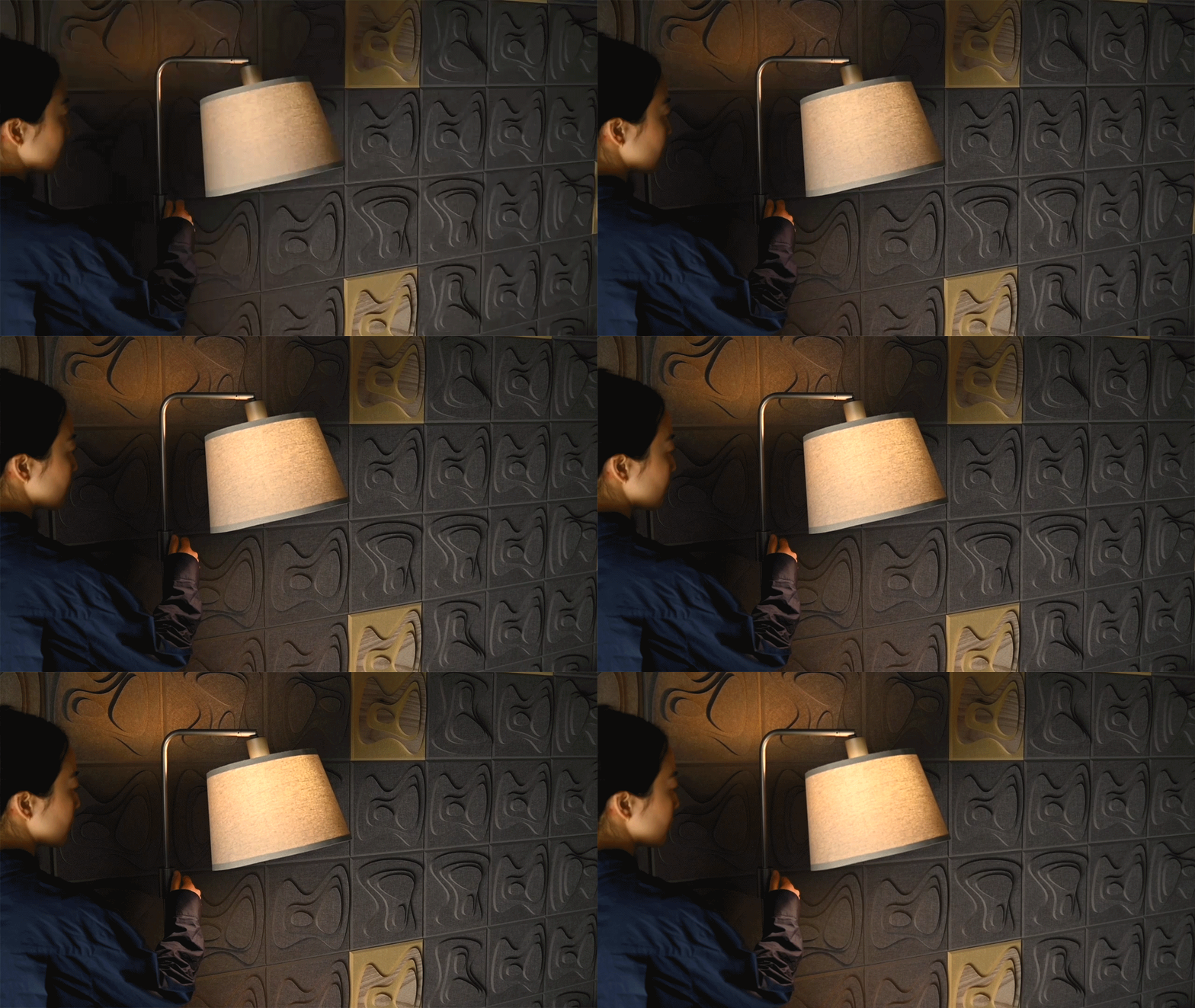 Contour Tiles | Colors: Smoke and Vanilla | Print: Kirei Ink Pine
Lighting defines how a space feels from morning to evening. Natural light encourages alertness and wellbeing, while soft, indirect lighting fosters relaxation and intimacy. Designers increasingly use layered lighting strategies — combining ambient, task, and accent lighting — to give spaces flexibility and emotional range.
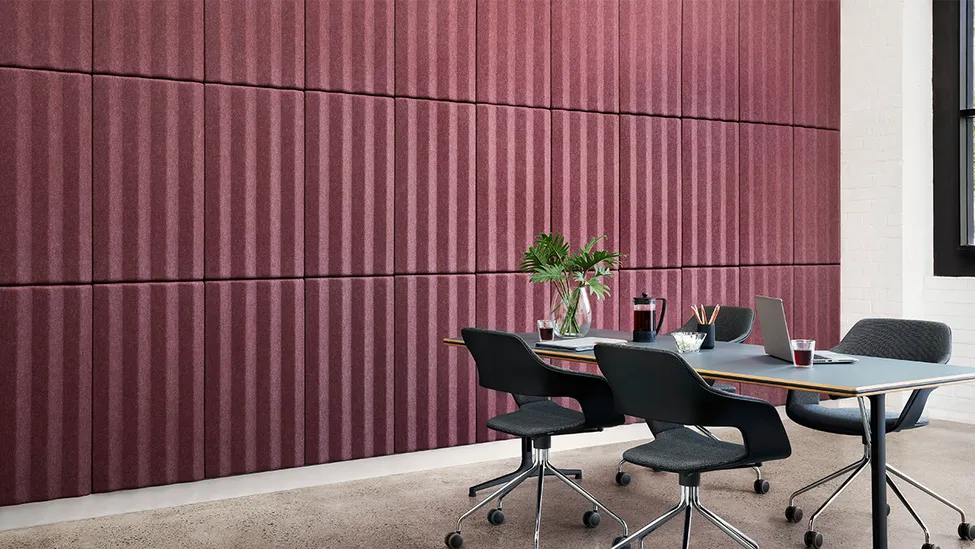
The interaction between light and surface is just as important. Textured walls and sculptural ceilings catch light differently throughout the day, creating movement and depth that subtly shifts the mood without changing the design itself. Acoustic materials with dimensional profiles (like our Contour Tiles) can enhance this effect, blending visual warmth with sound control.
Texture and Form: Making Spaces Feel Human
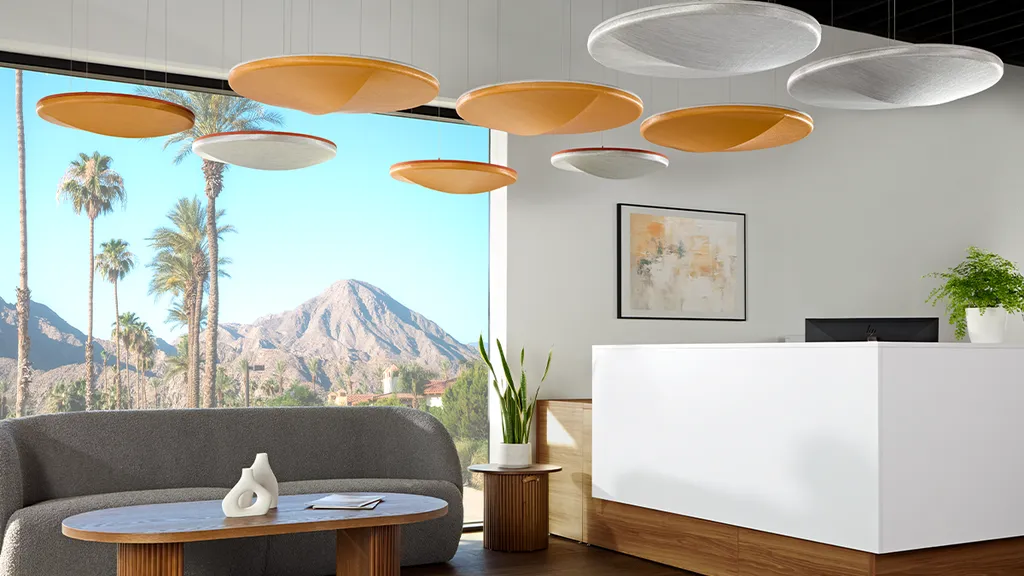 Xorel Artform | Circle 3D Clouds | Xorel Fabrics: Meteor 721 and Dash 35 | PET Colors: Mandarin and Mushroom
Flat, overly hard interiors can feel cold or overwhelming. Texture introduces softness, scale, and approachability — essential for spaces meant to feel welcoming or restorative.
Dimensional wall tiles, layered ceiling elements, and tactile materials invite interaction while also breaking up sound reflections. These forms help anchor large spaces, define zones, and create visual interest without visual clutter.
For designers, texture becomes a tool for storytelling — whether that story is energetic and expressive or quiet and refined.
Designing Mood as a Whole System
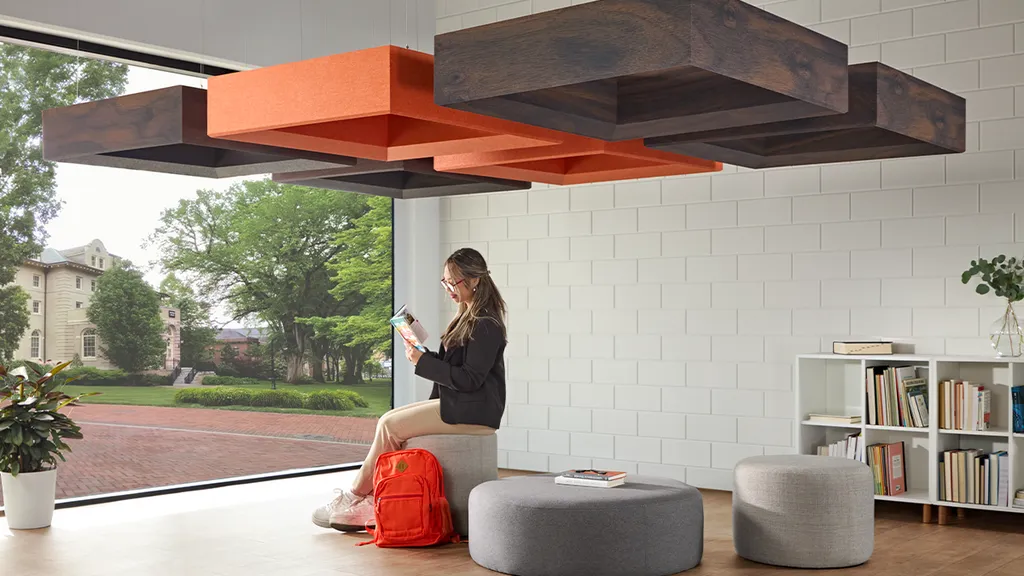 Plaza Clouds | Color: Mandarin | Print: Dark Walnut
Mood isn’t created by one design decision alone. It’s the cumulative effect of color, sound, light, and material — working in balance.
A thoughtfully designed space considers:
- How color influences emotion and behavior
- How acoustics support comfort and focus
- How lighting guides energy and movement
- How texture softens, grounds, or activates a room
When these elements are aligned, interiors feel intuitive. People linger longer, communicate more easily, and connect more deeply with the space.
Design That Feels as Good as It Looks
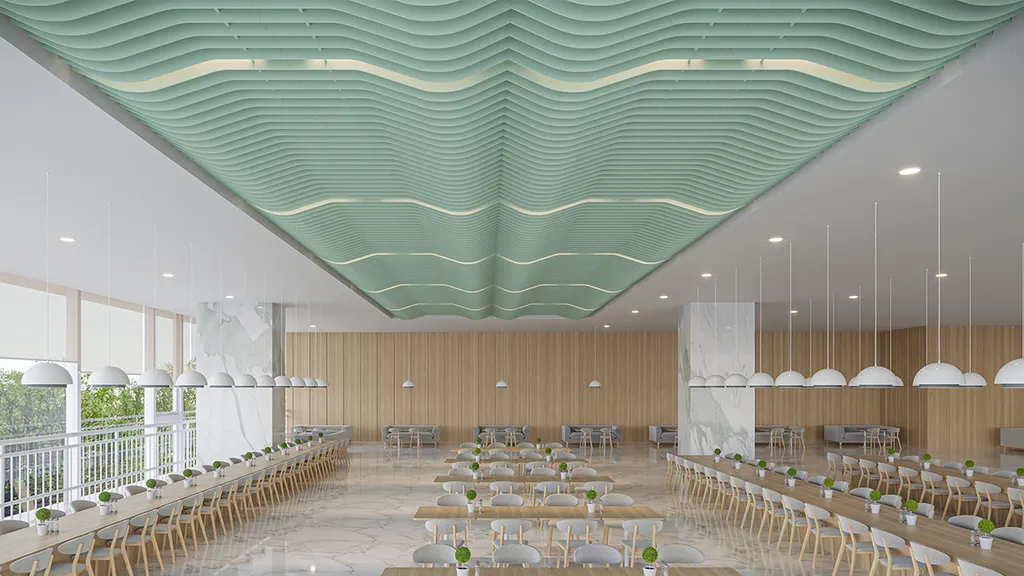 EchoSky Neu Tide | Color: Mint
At Kirei, we believe great design should engage the senses — not overwhelm them. By integrating acoustic performance with expressive materials and sculptural forms, designers can create environments that look striking and feel right.
Whether you’re shaping a collaborative workplace, a hospitality experience, or a learning environment, designing for mood means designing for people. And when people feel good in a space, everything else follows.
Ready to design spaces that sound, look, and feel better?
Get the latest inspiration and updates directly to your inbox.